
Polystyrene, particularly in its expanded form (EPS), is a common material used in various industries for packaging, insulation, and more. However, its environmental impact has been a subject of debate for years.
If your business is considering alternatives to polystyrene, you're not alone. The recent 2023 Macfarlane Unboxing survey found 42% of respondents indicating that sustainability was only important to them if it didn’t significantly reduce costs.
This were polystyrene has many positives, just not its lower cost.
While the general perception of polystyrene is often negative, there's more to the story.
What is Polystyrene?
Polystyrene is a versatile plastic that can be solid or foam. The solid form includes items like DVD and CD cases, while the foam form, known as Expanded Polystyrene (EPS) or Styrofoam, is commonly used in packaging to protect items during shipping. EPS is also popular in food packaging, such as trays and containers. When most people discuss polystyrene, they typically refer to EPS or its close cousin, extruded polystyrene (XPS).
Polystyrene is made by polymerizing styrene, a chemical used in various products. In its expanded form, EPS is composed of up to 95% air, which gives it its lightweight and insulating properties.
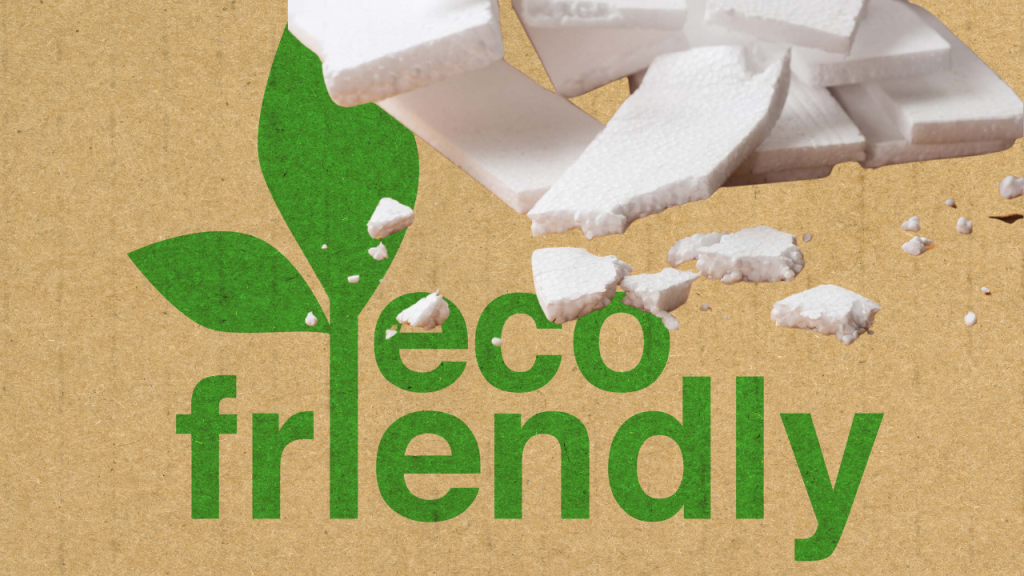
Is Polystyrene Environmentally Friendly?
Despite its reputation, expanded polystyrene (EPS) has some environmentally friendly attributes. Here’s a closer look at the environmental profile of EPS:
- Composition and Manufacturing: EPS is 98% air, and its production does not involve toxic substances. The main energy source in its manufacturing process is steam, and the water used is recycled multiple times, minimizing water waste. EPS also generates very little pollution during production, and any waste is typically reused.
- Resource Efficiency: The manufacturing of EPS uses less than 0.1% of global crude oil, yet it can deliver up to 200 times its own resource in thermal energy savings, making it resource-efficient. Additionally, its lightweight nature means that transporting EPS results in lower fuel consumption, further reducing its environmental impact.
- Insulation and Durability: EPS is widely used in construction due to its excellent insulation properties, which help to reduce energy consumption in buildings. It is also highly durable, maintaining its insulating properties throughout the lifetime of the buildings in which it is used.
The Recycling Question
One of the biggest concerns surrounding polystyrene is its recyclability. EPS is 100% recyclable, and thousands of tonnes are recycled annually in the UK alone. Many businesses have set up recycling schemes for used EPS, some of which involve compacting the material to make it easier to transport and recycle. This compacted material can then be turned into recycled polystyrene pellets, which are used to manufacture new products like coat hangers, picture frames, and CD cases.
Conclusion: A Surprising Environmental Packaging Solution
While EPS is often criticized for its environmental impact, the reality is it has multiple benefits.
It's production whilst oil based doesn't have many of the dark hidden eco-logical side of many other forms of packaging. Too much paper based packaging is still based around the destruction of forests. Eco-friendly plastics come with the huge impact of bamboo and palm oil trees that are replacing natural forests.
An often overlooked issue is the cost of transporting packaging material. Expanded polystyrene is too light and therefore expensive to import. The vast majority of polystyrene block is manufactured in the UK not in the far-east. This huge saving on transport costs swings the balance in favour of UK manufactured expanded polystyrene.
EPS is made up of 98% air, making it an efficient use of natural resources. It is non-toxic, uses minimal water and energy during production, and is fully recyclable. Furthermore, the amount of EPS in municipal solid waste is minimal, accounting for just 0.1%.
In conclusion, expanded polystyrene offers significant benefits in terms of resource efficiency, energy savings, recyclability and low cost.